
TECHVENDORLY MEDIA KIT
Build a useful campaign brief.
Audience context, editorial formats and the information needed to scope a clearly labelled TechVendorly partnership.
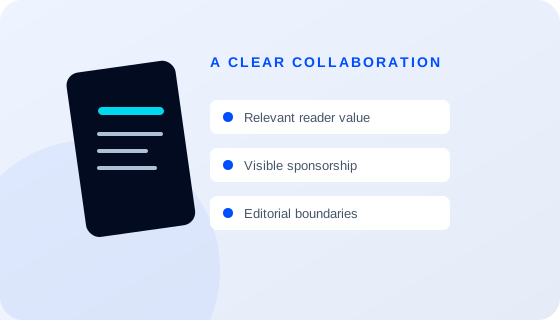
PLACEMENT PREVIEWS
Review the format before preparing a brief.
See labelled examples of a sponsored article, vendor profile and newsletter placement. Each is an illustrative layout, not a past client campaign.
PUBLICATION CONTEXT
Technology decisions across four connected desks.
TechVendorly publishes practical guidance for marketers, agencies, founders and small business teams choosing and using technology. Our editorial scope connects AI workflows, marketing, business software and the web. Campaign relevance starts with a question those readers need answered.
AI & Automation
Manageable workflows, useful instructions, human review and responsible adoption.
Marketing & SEO
Search visibility, content planning, measurement and clearer customer journeys.
Software & SaaS
Requirements, product selection, subscriptions, total cost and operating fit.
Websites & E-commerce
Website planning, publishing, storefronts, payments and maintainable visitor journeys.
FORMAT AND SCOPE
Match the placement to the reader’s task.
Sponsored article or vendor profile
Bring documented expertise, an original explanation or a clearly attributed product use case. Supply a factual source pack and identify commercial involvement. Editorial review determines suitability.
Product demonstration
Agree a narrow workflow, product access and the evidence needed. Any published hands-on account must come from real work, with its conditions and limits visible.
Newsletter sponsorship
Propose a relevant sponsor message and destination. Placement, copy, timing and the applicable edition are agreed in the campaign scope.
Category sponsorship
Align a labelled, time-bounded placement with one topic desk. Agree where it appears and distinguish the placement from independent editorial conclusions.
WHAT TO INCLUDE
Send a brief we can evaluate.
1. Reader and objective
Name the reader, the question being answered, the relevant category and the intended next step. Explain why the material is useful beyond a product announcement.
2. Format and destination
Specify the proposed placement, target timing, landing-page URL and budget range. Identify whether the campaign is sponsored, affiliate-supported or otherwise commercial.
3. Sources and access
Provide official product documentation, dated pricing, approved claims and any access needed for agreed work. Share only assets and quotations you have rights to use.
4. Working contacts
Identify the person responsible for factual questions, product access and approvals. Keep essential facts in the written brief so the scope is reviewable.
ASSETS AND APPROVAL
Prepare material that can be checked.
Supply a high-quality logo with clear usage rights, a plain-language product description, the final destination URL and evidence for specific claims. Original screenshots should identify the product context and exclude credentials or personal customer records. Final asset sizes and copy limits are agreed for the selected placement.
Factual review can correct errors about a product or supplied material. It does not purchase a favourable conclusion, search ranking or undisclosed link. Paid outbound links are marked rel="sponsored", and commercial placements are clearly identified.
Review the sponsored content guidelines, editorial policy and disclosure policy before submitting a brief.
DELIVERY AND REPORTING
Agree the evidence before the campaign starts.
The written scope should identify the format, placement, publication window, factual review steps and delivery record. Where reporting is part of the agreement, define the metric, source and reporting period before commissioning the work. A placement is not a guarantee of traffic, leads, conversions or search performance.
TechVendorly does not publish estimated reach, subscriber figures or campaign results as verified facts. Commercial proposals should use only dated, supportable information relevant to the agreed placement.
START WITH RELEVANCE
Share the idea and the reader outcome.
Use the partnership form to provide the context, proposed format, timing and supporting material. You can also review the sponsorship overview before preparing your brief.